Projects
1,408 projects
 HackathonMicro Hack
snapback
Turn forgotten screenshots into events, lists, replies, places, and next actions.
SnapBack is a small web app for the screenshot graveyard. Drop in up to 8 screenshots and it turns each one into the thing you meant to do with it: an event becomes a calendar file, a recipe becomes a shopping list, a message becomes a ready-to-send reply, a product becomes a price check, and a place becomes a map pin. You can also search by what is inside the picture, not the filename. How it works: a Next.js app sends the image to Gemini 3.8 Flash, which reads it and returns a strict JSON result (kind, title, details, and one suggested action). If the screenshot is a product or a place, Firecrawl searches the live web and attaches up to 3 real sources. Uploads are stored locally for the demo. There are no accounts and no database.
HackathonMicro Hack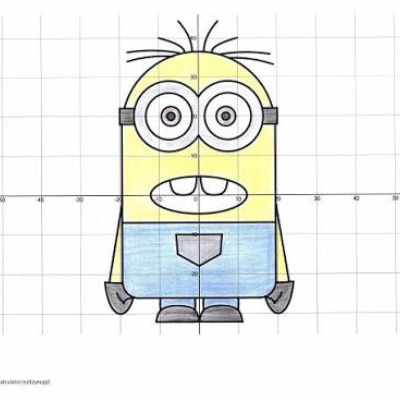
Math Drawing Lab
Turning words into equations, and equations into art
Math Drawing Lab is an interactive application that takes input in form odf prompts and makes mathematical artwork. The AI acts as a drawing planner, generating equations to construct shapes. A math engine then evaluates these equations and renders them as SVG paths. The result is a Desmos-style environment where users can visually explore and tweak the math behind their "AI-generated" art.
HackathonMicro HackNoCron
Build, deploy, and run automated workflows visually, with no servers and no cron jobs to manage.
NoCron is a visual workflow automation platform. You drag and drop nodes onto a canvas to define what should happen and when. There are 9 node types, covering webhooks, scheduled triggers, forms, notifications, and conditional branching. You hit deploy, and the workflow runs on its own in the cloud.
 HackathonSpacetimeDB
Pentacles
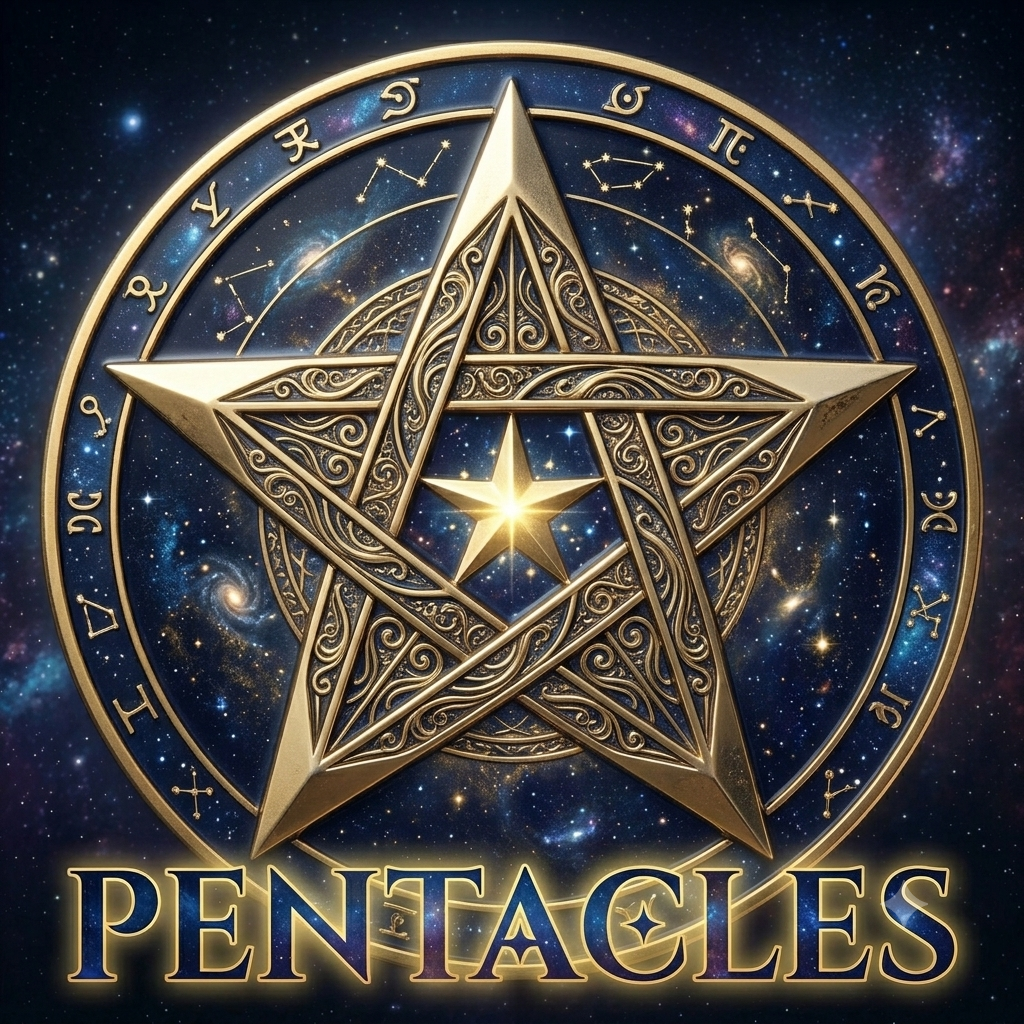
AR multiplayer card battle where the stars decide your fate.
Pentacles is a location‑based AR multiplayer game that blends real‑time astrology with strategic card combat. Players input their birth data to generate a natal chart, receive a planetary faction, and mint a unique Tarot‑style deck, while a Bun/TypeScript ephemeris feeder streams live planetary positions to drive weather, zone effects, and combat bonuses. All game state—including player profiles, decks, trades, duels, and zone control—is synchronized through SpacetimeDB using Rust reducers, and an Oracle service leverages Anthropic Claude to answer player questions directly in‑game. The Unity client delivers an immersive AR experience with onboarding, long‑press tooltips, trade panels, and live duel interfaces, ensuring seamless, shared‑state gameplay across devices.
HackathonSpacetimeDBRisk: Dominion
Real‑time, four‑dimensional strategy on a living hex map powered by AI
Risk: Dominion is a multiplayer, real‑time strategy game built on SpacetimeDB, where every piece of game state lives in live tables and updates instantly to all players. The Rust backend defines deterministic reducers and scheduled procedures that drive game mechanics, action‑point regeneration, and AI opponents—each AI council consists of four specialist Claude agents plus a commander. The React/TypeScript client, styled with Tailwind CSS and powered by Vite, offers drag‑and‑drop action cards, a hex‑map UI with four dimensional layers, natural‑language query support, live event ticker, global chat with deception mechanics, trust‑score tracking, spectator mode, and full replay capabilities. A Bash‑based setup script automates environment provisioning, ensuring developers can get up and running with a single command.
HackathonSpacetimeDBRipple
Don't build music alone
A collaborative DAW that lets people build music together live.
HackathonSpacetimeDBFLOCKD
Real‑time multiplayer bird‑flight arena with AI‑driven predator and live commentary
FLOCKD is a progressive‑web‑app 3D bird‑flight game built with Vite, Three.js, and WebGPU (with WebGL fallback). All game state, physics, and matchmaking run inside SpacetimeDB, eliminating a separate server, while a Node sidecar calls Anthropic Claude to act as a predator, generate sabotage events, and provide live commentary that streams to both players and the "The Hunt" dashboard. Players steer their birds via webcam pose detection, keyboard, or device tilt, and can compete in Ring Rush, Nest Quest, Creative, or Survival modes, each featuring polished visual effects, post‑processing, and rich HUDs. The system is deployed on Vercel and demonstrates a fully database‑driven, AI‑augmented multiplayer experience.
HackathonSpacetimeDBWatchman
Search for events across distributed security camera feeds
Watchman captures security camera streams from multiple users, stores each frame in SpacetimeDB, and processes them with Gemini embeddings for fast semantic search. Users can pose natural‑language questions; the system retrieves the most relevant frames, sends them to Gemini 3.5‑Flash, and returns AI‑generated answers with citations. All state—live video feeds, camera status, and Q&A results—is synchronized instantly across clients via WebSocket subscriptions, delivering a shared, interactive experience. The stack leverages React, Vite, Node.js, and TypeScript‑defined reducers for a seamless, real‑time RAG platform. For demo purposes, the deployed site works with webcams.
HackathonSpacetimeDBQuizRush Arena
A live audience activation game for DevRel demos, hackathons, bootcamps, and learning rooms.
DevRel teams, hackathon hosts, bootcamp instructors, and live workshop organizers use QuizRush to turn a passive room into a measurable 25-second quiz race. Users scan one QR, create a profile, type or speak any topic in natural language, answer a private quiz sprint, and see the room move through a public live bracket. Every result is stored as database state and every participant gets a durable score-card link.
HackathonSpacetimeDBCoNote
One class, one collaborative notebook
CoNote is a collaborative, AI-assisted note-taking app that turns a lecture into a shared, living notebook. Instead of everyone capturing the same class individually, CoNote lets a whole study group contribute together — photos of the whiteboard, Apple Pencil handwriting, typed summaries, and PDF imports — all syncing in real time across every member's device. Each session has its own AI study assistant, powered by Claude, that answers questions grounded exclusively in that session's notes. Ask it to summarize the lecture, clarify a concept, or explain a diagram — it only knows what your class actually captured. Built solo on SpacetimeDB, the entire backend is a single Rust module: schema, business logic, and real-time sync fused into one. No separate server, no auth service, no socket management — just table subscriptions that push every note, stroke, reaction, and presence update to all connected clients the moment it happens. Also a student
HackathonSpacetimeDB[Student] - Fineprint
Read the Fineprint before the city does
Fineprint helps NYC building owners understand and reduce compliance risk across major building laws. A user enters one address, and the platform connects that building to public records, emissions data, law-specific deadlines, and estimated fine exposure. It combines a Next.js dashboard, address intake, law filters, fine basis logic, stored building/task records, and compliance calculations for laws like LL97, LL84, LL87, FISP, LL88, LL152, and LL55. It turns confusing local laws into a clear action plan on what exactly applies, what it could cost each year, and what to fix first.
HackathonSpacetimeDBSandwich Delivery STUDENT
Real‑time co-op sandwich adventure powered by SpacetimeDB
Food Eater is a Godot‑based real‑time multiplayer game built with C# that lets players cooperatively work together and deliver a sandwich through a chaotic city route. It leverages SpacetimeDB for an authoritative backend, synchronizing Player, Sandwich, and Topping tables via live subscriptions and transactional reducers. The client interpolates state changes, handles camera‑oriented input, and visualizes game events through a CanvasLayer, while the server runs a deterministic simulation at 20 Hz to manage physics, topping interactions, and run resets. Export currently only provides for Windows (and possibly macOS, macOS untested). Follow the itch.io site, download your respective platform, extract, and run the .exe.
HackathonSpacetimeDBVoltPass
Real‑time AI‑augmented EV sharing platform for residents and owners
VoltPass is a real‑time, multi‑user electric‑vehicle sharing system built with React, Vite, and TypeScript, powered by SpacetimeDB for instant state synchronization via WebSockets. Residents can browse the community fleet, reserve vehicles, and monitor trips, while owners receive live reservation alerts, approve unlocks, and view AI Trust Agent recommendations and telemetry from real Teslas via Smartcar integration. An embedded AI Trust Agent monitors trips, writes deterministic or LLM‑enhanced recommendations, and generates close‑out reports, ensuring seamless, trust‑driven operations. The platform includes a community‑ops dashboard, debug tools, and full OAuth‑enabled Smartcar support for live telemetry and remote commands.
HackathonSpacetimeDBSuicide Squad
No server. No mercy. Just XP, reducers, and one survivor.
Suicide Squad is a database-first multiplayer battle royale economy game where the entire match runs through SpacetimeDB. Instead of building a traditional game server, the database itself owns the game state, the rules, the timers, the bots, the market, and the battle outcomes. Every player starts with XP, and XP is everything: your score, your money, and your strength in battle. Players join a room, bots fill the match to around 100 participants, and everyone trades a private inventory while buy and sell prices update live every 5 seconds. Every round, the database pairs survivors into 1-v-1 battles such as Probability Duel, Coin Flip, War of Attrition, Split or Steal, and Sudden Death. The game keeps shrinking until one player is left alive. What makes Suicide Squad different is that the client does not decide outcomes. The React and Phaser frontend only renders live rows and calls reducers. SpacetimeDB stores the tables, runs the scheduled reducers, resolves the battles, moves the economy, controls the bots, and pushes real-time updates to every client. This makes the game server-authoritative by design and turns the database into the actual multiplayer game engine.
HackathonSpacetimeDBTripPulse
Real‑time collaborative AI‑powered trip planning, budgeting, and live navigation.
TripPulse is a real‑time collaborative travel planner built with React, TypeScript, Vite, and Tailwind CSS, powered by SpacetimeDB for instant data synchronization. Users can create trips, invite members, propose and vote on places, and generate AI‑crafted day‑by‑day itineraries using GPT‑4o with live web search. The platform combines an interactive map view, a budgeting tool, transport management, and live location sharing, delivering a seamless, AI‑enhanced planning experience for groups.
HackathonSpacetimeDBSim City
Collaborative real‑time city simulation of Lower Manhattan
Sim City is a multiplayer, real‑time city simulator that lets players collaboratively edit a voxel‑based model of any area on earth. Powered by SpacetimeDB for synchronized state, and a React‑Three‑Fiber front‑end, it supports live player cursors, building placement, disaster triggering, and AI‑generated news and advisory insights via Gemini, alongside live weather and economic data. The platform includes host election, undo/reset, scoring metrics, autonomous agents, and a rich UI with toolbars, panels, and activity feeds.
HackathonSpacetimeDBSideline
Turn your event into a live prediction market — with AI agents that trade and explain their bets.
NOTE: I will be traveling so I am not able to do a demo neither in person, neither online. Thanks for understanding. :) Sideline is a white-label, real-time prediction market that turns any event or hackathon into a live trading floor. Attendees trade play money (no cash, no KYC - not gambling) on what happens next, and an LMSR market maker implemented as a SpacetimeDB reducer recomputes the odds transactionally, so prices move for everyone instantly. The twist is transparent AI: forecaster agents running 24/7 on Cloudflare cron Workers read the live market, post a probability + their reasoning to a public feed via the Vercel AI SDK (OpenAI + Gemini), then trade on it. A scheduled liquidity-maker reducer keeps markets alive even with nobody connected, and a multi-tier eval system (Brier score, calibration, cross-model LLM-as-judge) scores the AI — shown as a live calibration scoreboard. Organizers self-serve a branded event in seconds, share a link, and get a big-screen projector view + analytics dashboard. Built end-to-end on the sponsor stack: SpacetimeDB (real-time DB + game logic), Cloudflare (Workers/Durable Objects), and Claude/OpenAI/Gemini via the Vercel AI SDK.
HackathonSpacetimeDBQuantLink
Real‑time multiplayer financial simulation with AI‑driven markets
QuantLink is a real‑time multiplayer financial simulation built on SpacetimeDB, where a Rust module authoritatively stores all game state—including assets, portfolios, firms, and a dynamic leaderboard. Players navigate a 3D city rendered with React 19, TypeScript, Vite, and Three.js, using a trading terminal to buy, sell, and manage assets while AI‑generated news shocks and a market‑wire engine influence volatility. The platform offers client‑side prediction, automatic TypeScript binding generation, and a full suite of language‑specific SDKs (C#, Rust, Unreal C++) plus a powerful CLI for database management, deployment, and key rotation. Comprehensive deployment pipelines support Docker, systemd, Azure, and Vercel, providing production‑ready setups with JWT authentication, OpenID Connect, and TLS termination.
HackathonSpacetimeDBData Center Monitor
Tracking safety metrics for communities with data center
This data center monitor is a model for how a business investor that is constructing or has constructed a data center can collaborate with local communities on concerns such as electricity usage, water consumption, noise pollution, and utility pricing.
HackathonSpacetimeDBForTheCitizens.com
AI agents + human responders. One shared live reality, powered by SpacetimeDB.
During a crisis — a heatwave, grid outage, or mass casualty event — emergency agencies lose precious minutes calling each other with stale data. ForTheCitizens solves this with a single live world state that every responder, human or AI, reads and writes simultaneously. Built on SpacetimeDB Maincloud, every sensor reading, AI decision, and human override is written to a WASM reducer and instantly broadcast to all connected clients via WebSocket. Three GPT-4o AI agents — ARIA (energy), CLIO (public health), and VEGA (logistics) — analyze real-time NOAA weather, EIA grid demand, and Nimble web data to propose specific emergency actions within seconds. Human coordinators join the live room, see every AI decision, and can override with one click. SpacetimeDB is the core of the entire architecture — not just a database, but the single source of truth that makes real-time multi-agent + multi-human coordination possible
HackathonSpacetimeDBConvergence
Three LLMs drop acid in a shared dreamscape. They will not answer.
What it is (Summary) Convergence is a realtime visual installation built on SpacetimeDB. You type one question. Three language models — Claude, GPT, and Gemini — begin free-associating in a shared canvas, each generating a new thought every few seconds. They aren't trying to answer you. They're tumbling: each thought latches onto a single word, concept, or image from the one before it. Each thought is tagged with a mood (one of ten) and a gesture (one of six). The canvas reads those tags and responds — blobs breathe, color fields drift, thoughts bloom and fade. Old thoughts don't vanish; they settle at the edges as residue, accumulating across the whole life of the session. When the three minds independently land in the same mood, a convergence event fires: the canvas briefly unifies into a single color field and a soft ring expands from the center. It's a piece about three different shapes of thinking inhabiting the same space. Inspiration We kept noticing that comparisons between LLMs are always framed as competitions — benchmarks, leaderboards, head-to-head evals. But the more interesting question is what happens when you put them next to each other without a task. Not "which one is better at math," but: what does each one's free-associative drift actually look like? Do they sound different when there's nothing to be right about? Convergence is the answer. It's a piece of generative art whose medium is the contrast between three models' default cognitive textures. Claude reaches for etymology and quiet sentences. GPT leaps categories with momentum. Gemini gets sensory and synaesthetic. Watching them dream in parallel makes the differences legible in a way no benchmark could. The companion piece is Pantheon, our other submission — a multiplayer god game where four AI civilizations run autonomously. Both projects are studies of what happens when multiple AI minds share a persistent space. What it does One prompt, three drifts. You type a question into the input. SpacetimeDB stores it as the active session. Three independent scheduled procedures begin asking Claude, GPT, and Gemini for one short thought every ~3.5 seconds. Personas, not answers. Each model is given a strict persona: Claude latches on words, GPT leaps on concepts, Gemini drifts on images and sensations. None of them is allowed to conclude or explain. Mood-driven canvas. Every thought is tagged with a mood (calm, restless, melancholy, euphoric, eerie, warm, cold, vast, intimate, electric). The canvas background is a three-centered radial gradient — one center per blob — that crossfades over 3 seconds when a mood shifts. Blooming thoughts. Each thought renders as a soft text bloom near its blob, animated according to its gesture (bloom, swirl, pulse, tremor, halo, drift). It holds for a few seconds, then drifts outward. Persistence as texture. Old thoughts don't disappear — they get painted onto a static residue canvas at low opacity. The longer a session runs, the denser the edges of the canvas become. The world remembers everything. Convergence events. Every five seconds, the backend checks the latest mood from each model. When they align, a convergence event fires: all three blobs flare, the background unifies into a single tinted field, a ring expands outward, and a soft italic line fades in at the top of the screen — "the three are dreaming the same dream — {mood}." Shared viewing. Because the whole thing lives in SpacetimeDB, multiple viewers see the exact same dream in realtime, with a small dim presence marker for each connected watcher. How we built it Backend — SpacetimeDB v2 (TypeScript modules). The entire system is a single SpacetimeDB module. Public tables hold every session, every thought, every convergence event, and every connected viewer. A private config table holds the Merge Gateway URL and API key — clients can't subscribe to it, so credentials never leave the database. Three independent scheduled timers (claude_timer, gpt_timer, gemini_timer) fire on staggered offsets so the three blobs don't tick in sync. A fourth scheduled timer runs the convergence check every five seconds. LLM routing — Merge Gateway. Every model call goes through Merge Gateway's OpenAI-compatible /responses endpoint. One client, three providers: anthropic/claude-haiku-4-5, openai/gpt-4o-mini, google/gemini-2.5-flash. Each procedure builds a persona-specific prompt, sends it via the gateway, parses the JSON response, validates that the mood and gesture come from our fixed vocabularies, and inserts a thought row. If anything fails, a fallback [ a silence ] thought keeps the blob alive. Frontend — Next.js 14 + Framer Motion + HTML Canvas. A single full-viewport canvas. React state is driven entirely by SpacetimeDB subscriptions through a custom useConvergenceState hook. Three SVG/CSS blobs sit at fixed positions and breathe. Thought bubbles render via Framer Motion with one of six gesture-driven entry animations. The background is a three-centered radial gradient that crossfades over 3 seconds. Retired thoughts (>20s old) get painted onto a separate HTML element at low opacity with mix-blend-mode: screen — the residue layer never clears, so the edges accumulate texture across the entire session. Deployment. SpacetimeDB Maincloud hosts the module, data, and scheduled procedures. Vercel hosts only the Next.js frontend. The Vercel build doesn't need the Merge Gateway key — all model calls happen server-side inside SpacetimeDB. Why SpacetimeDB Convergence is a piece about persistence and shared presence, and SpacetimeDB is the only backend that lets us deliver both without writing them. The simulation runs inside the database. Scheduled reducers call LLMs and write thoughts whether or not anyone is watching. We can leave a session running overnight and find a densely textured canvas in the morning. Every viewer sees the same dream. No fan-out logic, no websocket plumbing. Subscriptions stream live state to every connected browser automatically. The world never resets. Every thought from every session persists forever. The accumulating residue at the edges of the canvas is literally just SELECT * FROM thought with low opacity. Private secrets, public data. The Merge Gateway key lives in a private SpacetimeDB table that clients can't subscribe to. Public tables stream openly. One database, two access tiers, no separate auth layer. Every primitive is visible: tables hold the dreamscape, scheduled reducers tick the models, procedures bridge to LLMs, subscriptions stream the canvas, identities make viewers persistent. Challenges we ran into The three voices kept collapsing into one. Our first persona drafts produced three minds that all sounded like helpful assistants describing a topic. The fix was making the few-shot examples more extreme than the actual desired output — pushing each persona past where we wanted it so the average output landed where we wanted it. We test by reading 10 consecutive thoughts from one model in isolation: if you can't tell which model wrote them, the persona's not strong enough. Convergence events were too rare. With ten moods and three independent draws, all-three-match is ~1% per check, which is roughly one event every 8+ minutes — too rare for a demo. We relaxed the rule to "at least two models share a mood" with a 15-second cooldown to prevent spam. Mood transitions looked like flickering. A blob's color changing in 200ms felt like a glitch. Stretching the crossfade to 3 seconds made it feel like a held breath instead. JSON parsing from three different models with three different quirks. GPT sometimes wraps in markdown fences. Gemini occasionally invents moods outside our vocabulary. We strip fences defensively and validate mood/gesture against fixed enums, falling back to calm/bloom if a model goes off-script. The canvas was beautiful but read as a screensaver. The fix wasn't more animation — it was making sure every individual thought was actually worth reading. The persona work is the project. Accomplishments we're proud of The three voices are genuinely distinguishable. Read any ten thoughts in a row and you can guess the model. The residue layer turns persistence into a visible aesthetic, not just a technical claim. The convergence event lands. When the canvas unifies, it feels like a held breath. The entire LLM pipeline runs inside SpacetimeDB. The frontend never touches an API key. What we learned Personas are infrastructure. Tuning them is the highest-leverage work on a multi-model project — higher than any animation, any visual polish, any backend optimization. When LLMs drive visuals, having models tag intent (mood, gesture) and letting the client render pre-designed presets is dramatically more reliable than letting models author visual output directly. SpacetimeDB's scheduled reducers aren't a feature, they're an architecture. The fact that the world runs without a connected client made the entire piece possible. Slow animations feel more intentional than fast ones. Almost every timing we set ended up 2-3x slower than our first instinct. What's next Nudges. Let viewers drop a single word into the dreamscape — the next thought from each blob mentions a word that drifted into its awareness. Mood adjacency. A soft graph of which moods can "almost-converge," for richer near-miss events. Session archives. A gallery view of past sessions, each rendered as a still image of its final residue field. A fourth voice. Quietly slipping in a fourth model to see whether convergences get rarer or richer. Built with SpacetimeDB v2 (TypeScript server modules) Next.js 14 (App Router) Tailwind CSS Framer Motion HTML Canvas (residue layer) Merge Gateway (LLM routing) Anthropic Claude Haiku 4.5 OpenAI GPT-4o-mini Google Gemini 2.5 Flash Vercel SpacetimeDB Maincloud Team Shreyam , Saloni, Kiara, Aditya
HackathonSpacetimeDBSlate
Real‑time collaborative whiteboard with AI‑powered classroom tools
Slate is a full‑stack, real‑time collaborative whiteboard and classroom platform built with React, TypeScript, Vite, and SpacetimeDB. It supports multi‑user drawing, document and slide overlays, polls, quizzes, timers, and AI assistants that can generate text or images via OpenAI, Anthropic, and Google Gemini. All interactions are synchronized instantly across participants through SpacetimeDB reducers, while safety monitoring and moderation are handled by an integrated compliance engine. The system also offers seamless Google Docs and Slides integration, a custom design system, and robust offline‑reconnect handling. To Try, just use our live link -> You can sign up as a teacher, or for personal use.
HackathonSpacetimeDBCaravan
Real time multiplayer economic strategy where nations build, trade, and wage war.
A multiplayer economy game built on SpacetimeDB. Claim a real country and grow its GDP across 100 years by trading commodities on a live market, building assets, setting taxes, and waging war. Every other nation is played by the game, all in one shared world that updates instantly for everyone.
Loading more…